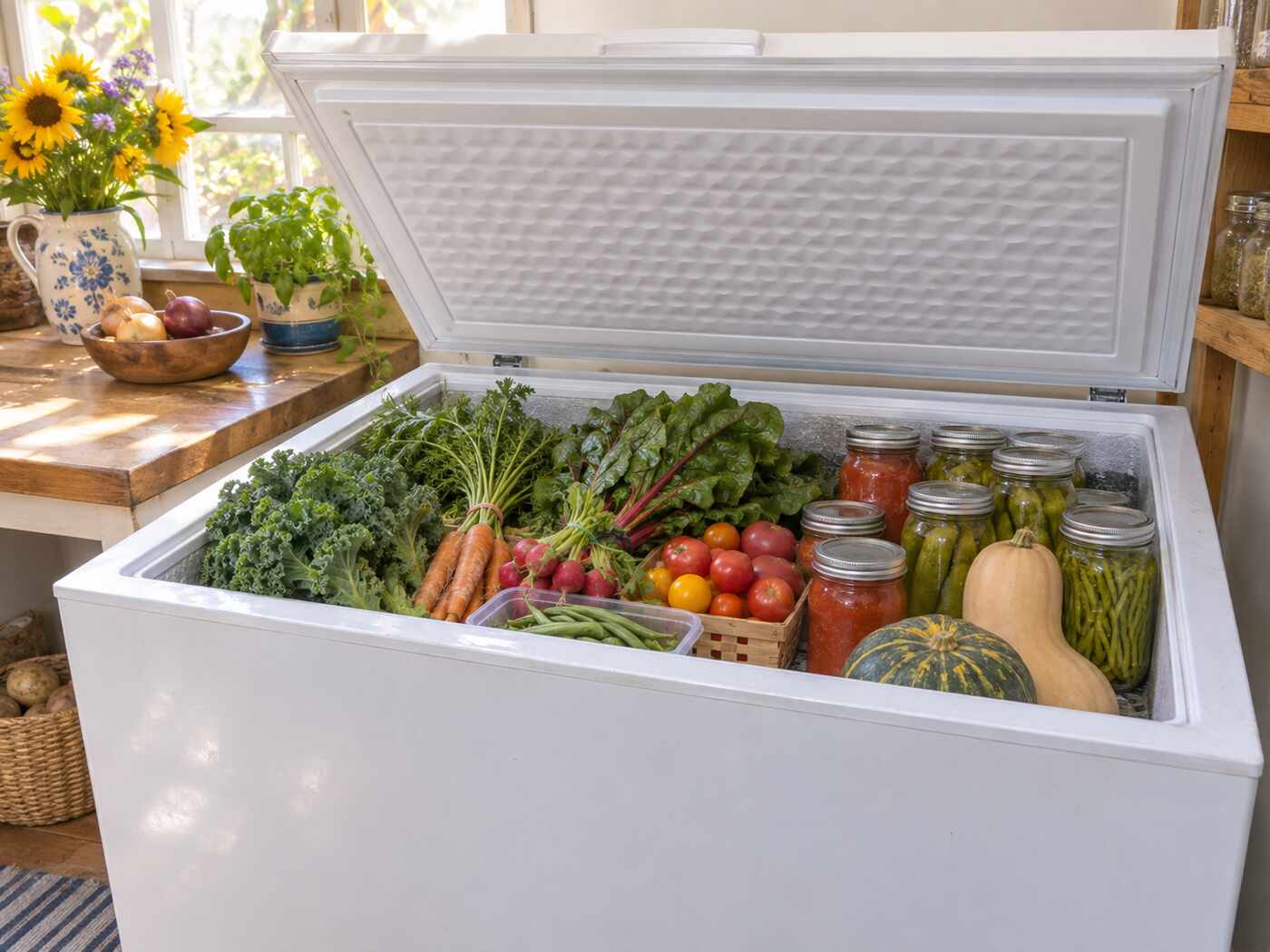
In short: a chest freezer to fridge conversion means running an ordinary chest freezer at refrigerator temperature by plugging it into an external thermostat. Because a chest keeps its cold air in when the lid opens and usually has thicker insulation, owners have measured daily use of roughly 0.2 to 0.7 kWh, against about 1 kWh or more for many upright fridges. The trade-offs are condensation, awkward access and the need to keep food at 40°F (4°C) or below.
The chest fridge became a classic project among off-grid households and makers in the 2000s, and the old Holy Scrap blog wrote about its own conversions several times. This guide explains the idea, collects the published measurements, and sets out the food safety rules that apply to any home refrigerator. It does not report our own tests; every figure comes from the sources listed at the end.
What is a chest fridge?
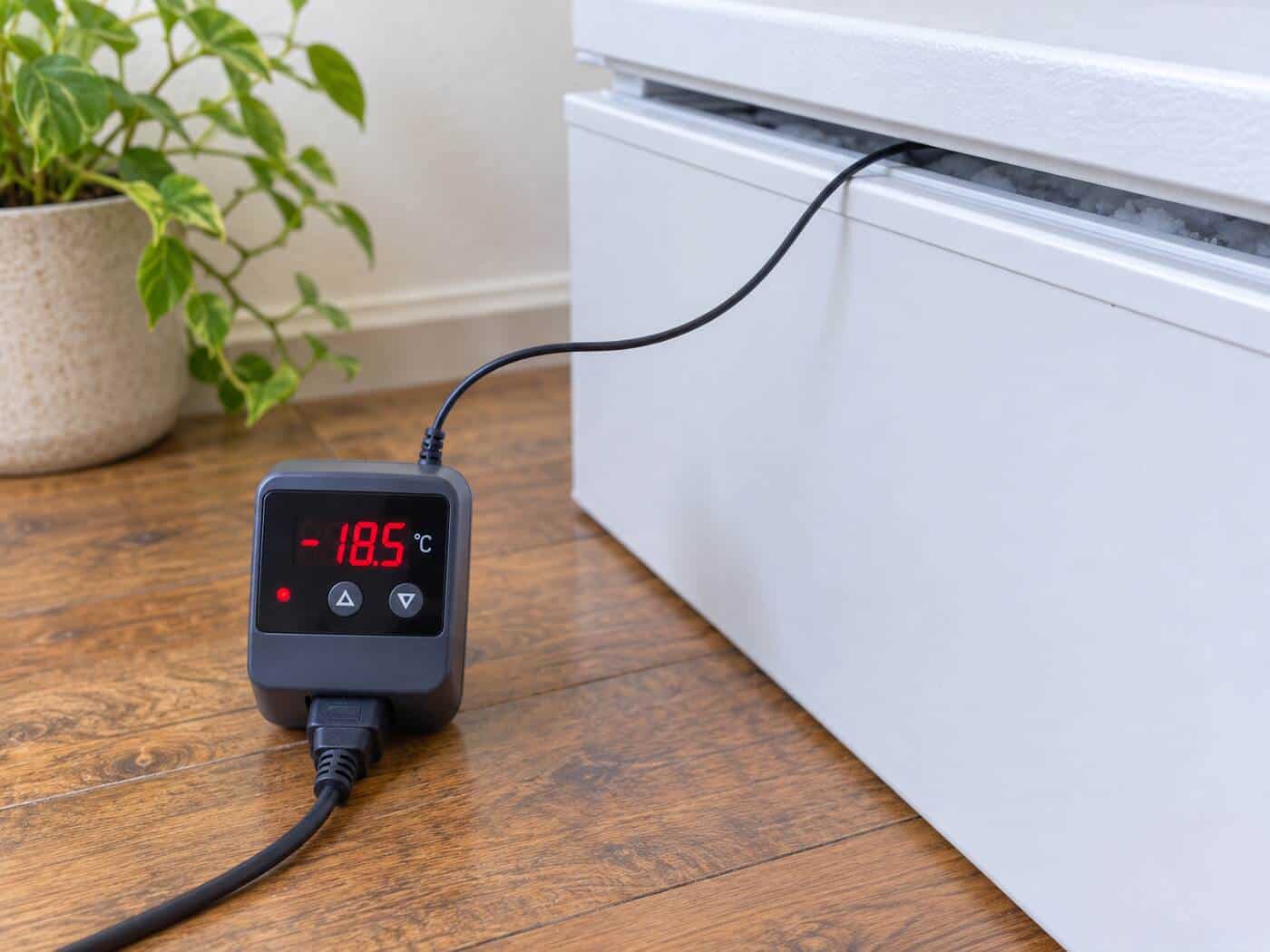
A chest fridge is a chest freezer that has been told to stop early. A normal freezer runs its compressor until the inside reaches about 0°F (−18°C). In a conversion, an external temperature controller sits between the wall socket and the freezer plug. A probe inside the chest reads the air or a container of water, and the controller cuts the power once the inside reaches a refrigerator setting, then restores it when the temperature rises. The freezer itself is not opened up or rewired.
A temperature controller is a small box with a socket, a sensor lead and a set point. The same kind of device is used to hold steady temperatures for fermenting, which is why the old Holy Scrap blog wrote about fridge and fermenter controllers together.
Why a chest uses less energy
Two things work in the chest’s favour. First, cold air is heavier than warm air. When you open an upright fridge the cold air spills out across the floor, while an open chest holds most of it in, as Lifehacker’s write-up of the idea explains. Second, freezers are built to hold a much larger temperature difference than fridges, so they tend to have more insulation. Run at fridge temperatures, that insulation is working against a far smaller gap, and the compressor runs less.
Federal efficiency data show how efficient chest designs already are. ENERGY STAR puts a certified chest freezer at about 215 kWh a year, roughly $30 in electricity, against about 395 kWh for a certified upright freezer. The agency also notes that manual-defrost models use about half the energy of automatic-defrost models.
What owners have measured
Most published figures come from individuals with plug-in energy meters, not from laboratories, so they vary with climate, freezer size, set point and how often the lid opens. They are still useful because several independent measurements point the same way.
| Source | Set-up | Reported use |
|---|---|---|
| Eric Praetzel | 12 cu ft chest freezer as fridge | about 305 Wh a day, against about 1.1 kWh a day as a freezer |
| BuildItSolar | small chest freezer as fridge | 0.204 kWh in the first 24 hours, average 8.3 W, about 73 kWh a year |
| Northern Arizona Wind & Sun forum | member’s unit at 37–38°F over 40 days | about 230–260 Wh a day |
| New Life on a Homestead | loaded chest fridge on solar | 0.68 kWh a day at first, then 0.51 kWh a day |
Praetzel estimated that his converted freezers used about a third of the energy of a 17 cubic foot fridge from 1993 and a 60 to 70 percent reduction overall. He also offered a rule of thumb: take the freezer’s EnergyGuide rating and divide by about 2.5 to estimate its use as a fridge. He was careful to add that he could not substantiate some of the more dramatic claims circulating online, such as a chest fridge using one fifteenth of a normal fridge’s power. Lifehacker’s article quoted a figure of about 0.1 kWh a day; that sits at the very low end of what other owners report.

Setting the temperature
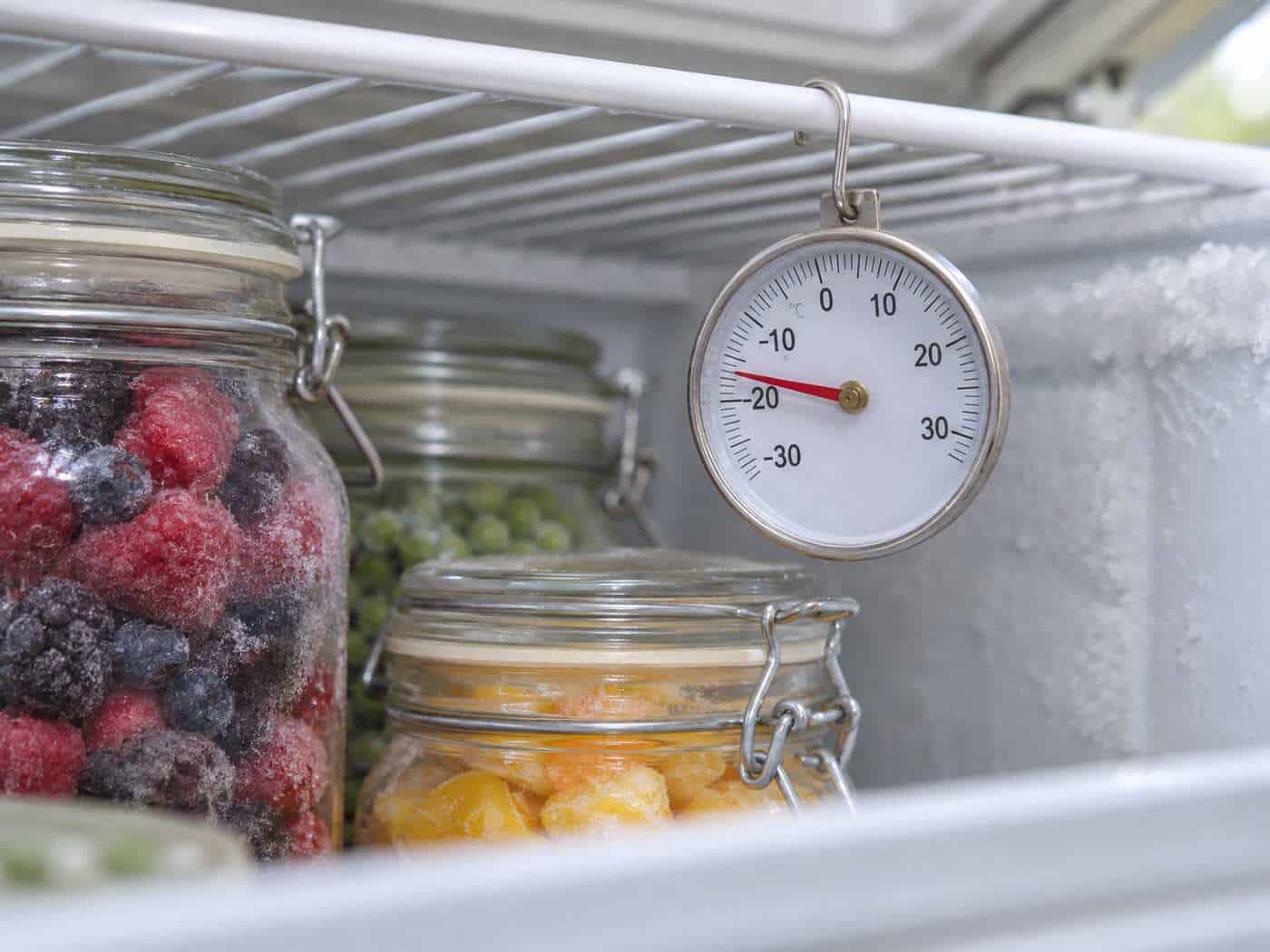
The controller set point is a food safety decision, not just an energy one. The USDA’s Food Safety and Inspection Service says a refrigerator should hold 40°F (4°C) or below, and recommends an appliance thermometer to check it. The range from 40°F to 140°F is the danger zone, where bacteria can double in number in as little as 20 minutes.
Many owners set their controllers in the mid to high 30s Fahrenheit to leave a margin. The forum member above reported running at 37 to 38°F. Placing the probe in a jar of water rather than open air smooths out the readings, because the water changes temperature more slowly than the air does when the lid opens.
Condensation and other drawbacks
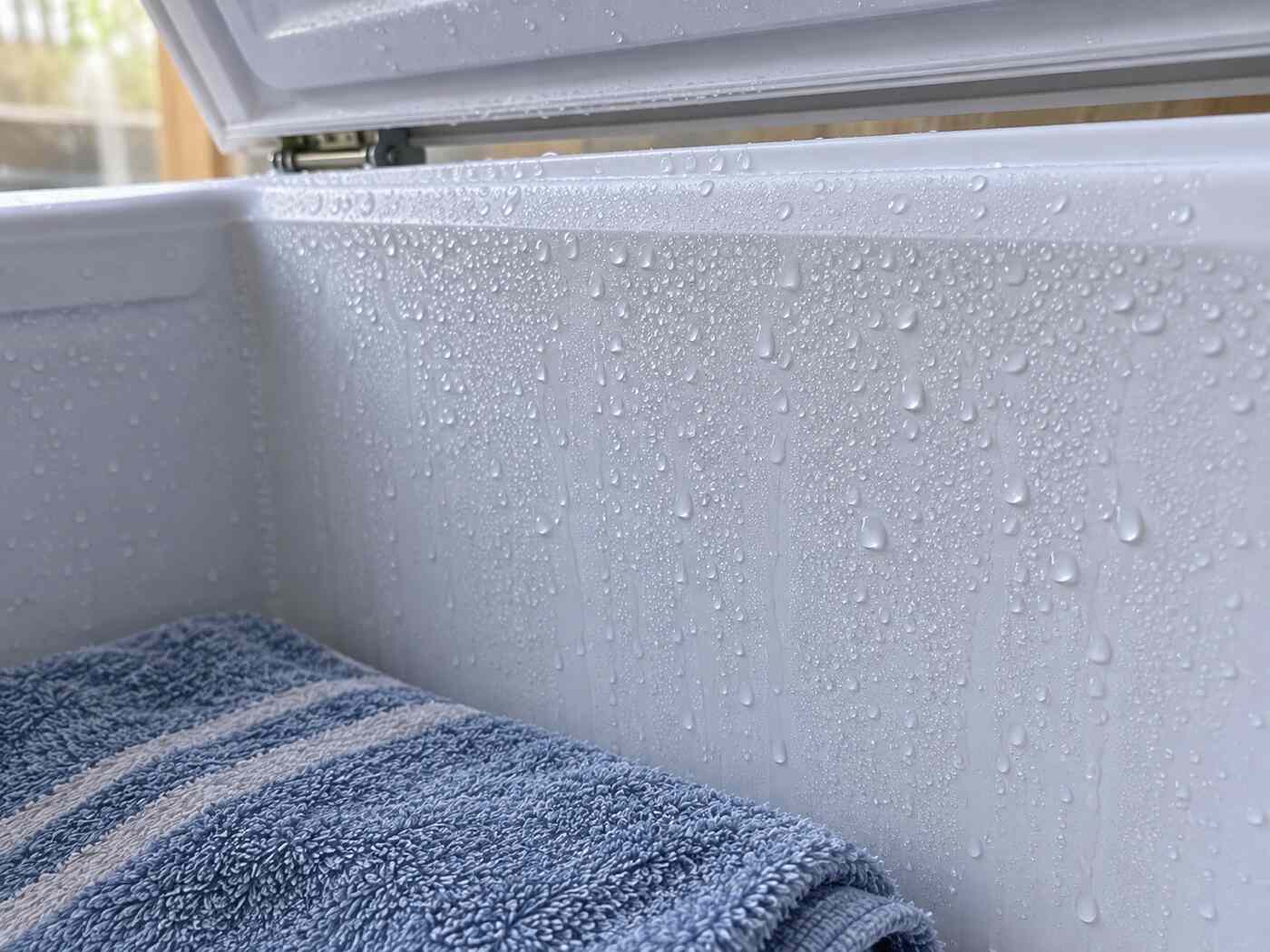
Every source agrees that moisture is the main nuisance. Warm room air enters each time the lid opens, and its water condenses on the cold walls and gathers at the bottom. Praetzel describes this condensation problem, and owners deal with it by wiping out the chest, leaving a towel in the bottom or using a dehumidifying container. Water left standing can encourage mould and odour.
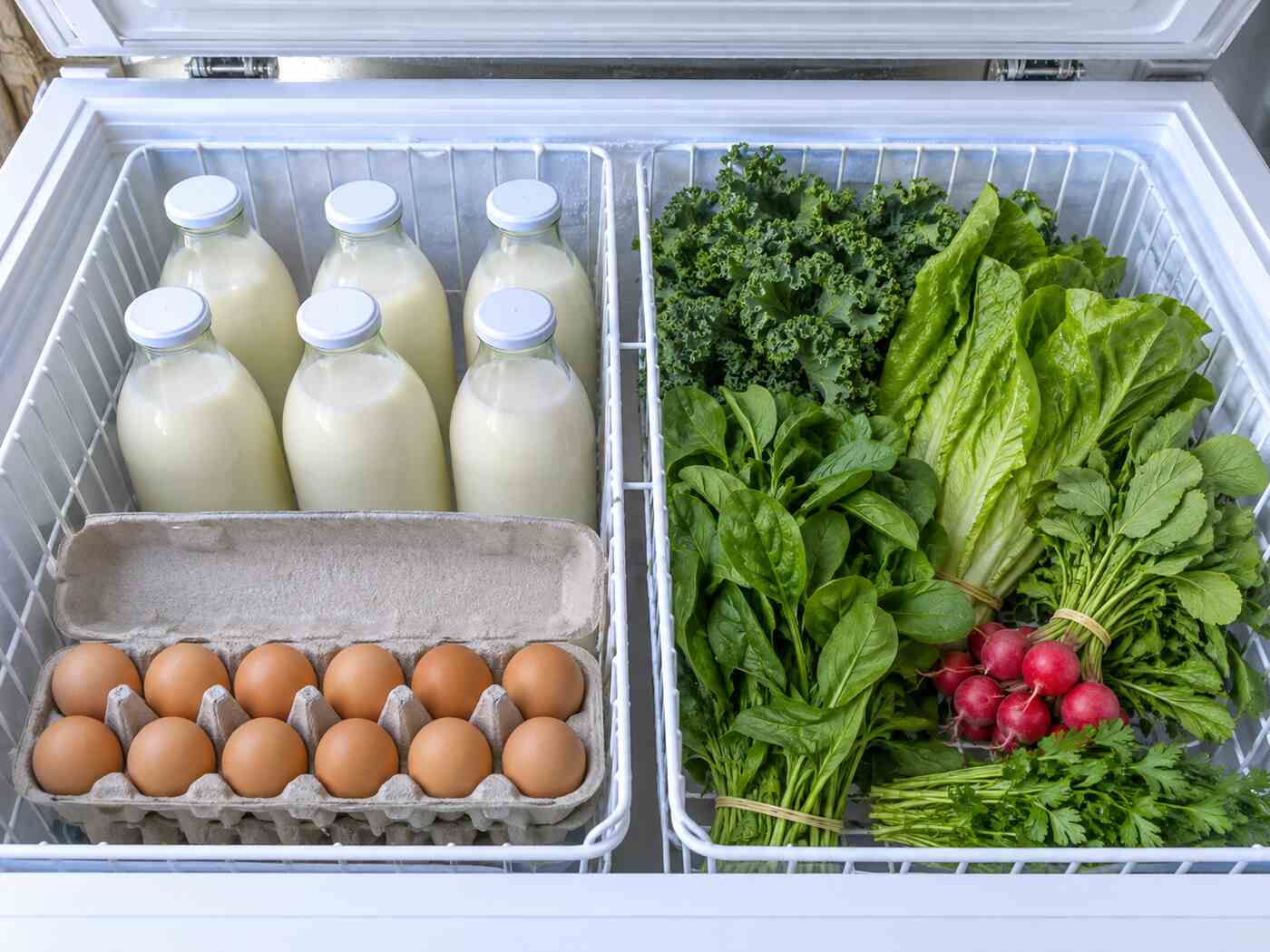
Access is the other cost. Food at the bottom of a deep chest is hard to reach, so most owners use stacking baskets or crates. A chest also takes more floor space than an upright fridge of the same volume.
When a conversion makes sense
The project pays back fastest in places where every kilowatt-hour is expensive: small off-grid solar systems, cabins with limited battery storage and homes trying to shrink a peak load. If your batteries are lead-acid, our guide to lead-acid battery desulfation explains why keeping them charged matters.
On a grid connection with cheap power, the saving over a modern efficient fridge may be small. ENERGY STAR certified products must be at least 10 percent more efficient than the federal minimum, so a new certified fridge already narrows the gap. The conversion also suits people who need a second fridge for drinks, fermentation or a garden harvest, where the awkward access matters less.
Step-by-step overview
A typical conversion, as described across the sources, follows the same basic order. This is a summary, not wiring advice.
- Choose a chest freezer, ideally a manual-defrost model with a good efficiency rating.
- Buy a plug-in temperature controller rated for the freezer’s current draw.
- Plug the freezer into the controller and the controller into the wall.
- Run the probe lead under the lid seal and place the sensor in a jar of water inside.
- Set the controller to a fridge temperature and check with a separate appliance thermometer for several days.
- Add baskets or crates, and plan a routine for wiping out condensation.
If you track energy with a plug-in meter for a few weeks, you will have your own figure to compare with the table above.
Key takeaways
- A chest freezer to fridge conversion uses an external thermostat; the freezer is not rewired.
- Owner measurements range from about 0.2 to 0.7 kWh a day, often well below a typical upright fridge.
- Keep food at 40°F (4°C) or below and check with an appliance thermometer.
- Condensation and deep, awkward storage are the main drawbacks.
- The project pays back best on small solar systems and as a second fridge.
Common questions
Does converting a chest freezer void the warranty?
The conversion does not open or rewire the freezer; it only cuts the power earlier using a plug-in controller. Whether that affects a warranty depends on the manufacturer’s terms, which our sources do not address. Check the warranty document for your model before you start, and keep the original plug and manual in case you need to return the unit to normal use.
How much electricity will a chest fridge use?
Published owner measurements run from about 0.2 kWh a day for a small unit to roughly 0.5 to 0.7 kWh a day for a larger, well-used one. Praetzel’s rule of thumb is to divide the freezer’s EnergyGuide rating by about 2.5. Your result will depend on room temperature, set point and how often the lid is opened.
What temperature should I set?
The USDA says a refrigerator must hold 40°F (4°C) or below. Many owners set their controllers in the mid to high 30s Fahrenheit to leave a margin, and confirm with a separate appliance thermometer. Avoid setting too close to freezing if you store fresh vegetables, since some will be damaged by frost.
Why is there water at the bottom?
Warm, moist room air enters each time you open the lid. When it meets the cold inner walls, the water vapour condenses and runs down. All the sources describe this. Wiping the interior regularly, keeping a towel in the bottom and limiting how long the lid stays open all reduce the problem.
Can I still use it as a freezer later?
Yes. Because the freezer’s own thermostat is untouched, removing the external controller and plugging it straight into the wall returns it to normal freezer operation. Dry the interior first so that leftover moisture does not turn into a layer of ice.
How we put this together: we compared published owner measurements from several independent sources, checked the efficiency context against ENERGY STAR, and took the temperature rules from the USDA Food Safety and Inspection Service. We have not run our own conversion. For related reading, see our guides to waste vegetable oil as fuel and Truth or Consequences hot springs history, or return to the home page.
Sources
- Eric Praetzel, chest freezer conversion notes
- BuildItSolar, freezer to fridge conversion
- Northern Arizona Wind & Sun forum, chest freezer as a chest refrigerator
- Lifehacker, convert a chest freezer into a super-efficient refrigerator
- ENERGY STAR, freezers
- USDA FSIS, refrigeration and food safety
- New Life on a Homestead, chest freezer to fridge on solar