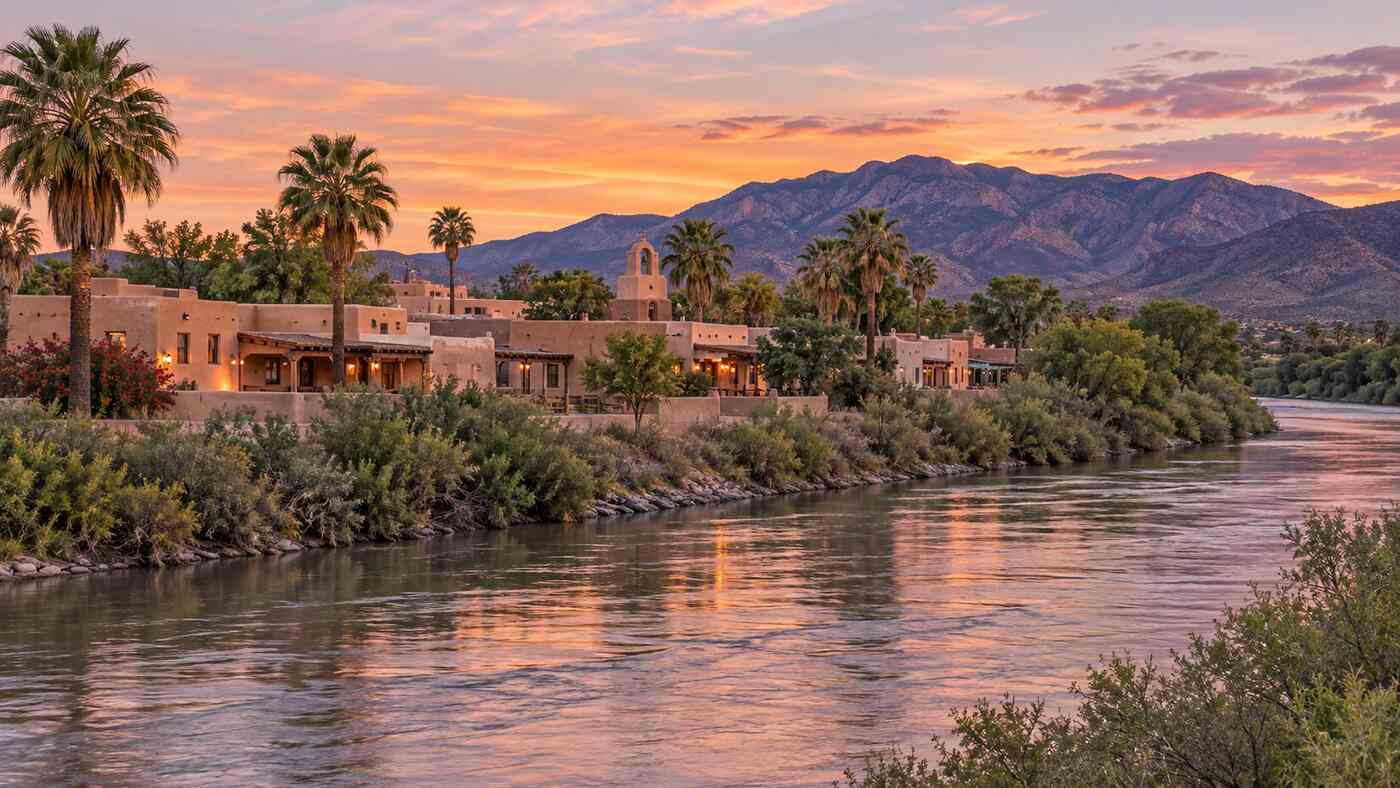
In short: Truth or Consequences hot springs history begins with a mineral spring on the Rio Grande known as Palomas Hot Springs. The town incorporated as Hot Springs in 1916, became a spa resort with around 40 bathhouses by the late 1930s, and renamed itself after a radio quiz show on March 31, 1950. Its bathhouse district is on the National Register of Historic Places, and today the main question is how long the geothermal water can keep up with demand.
Truth or Consequences, usually shortened to T or C, is a small city in Sierra County, southern New Mexico. It was home to the old Holy Scrap blog, whose authors wrote about local life, the dam walk and the palms and pools of their adopted town. This guide sets out the town’s history from published records: the city’s own history pages, the federal register nomination for its bathhouse district, regional reporting and a college library guide.
Palomas Hot Springs and the Rio Grande
The springs sit on the Rio Grande rift, a long break in the Earth’s crust along which hot water rises. A research guide from El Paso Community College notes that the name Palomas, Spanish for doves, came from the birds that gathered there. It records a bathhouse built in 1882 by the John Cross Cattle Company over the spring now called Geronimo Springs.
Wikipedia’s article on the city describes the water as coming from the Hot Springs Artesian Basin, and also traces the first bath to the John Cross ranch. For decades the springs were a stop for cattle drivers and travellers rather than a town.
From Palomas to Hot Springs
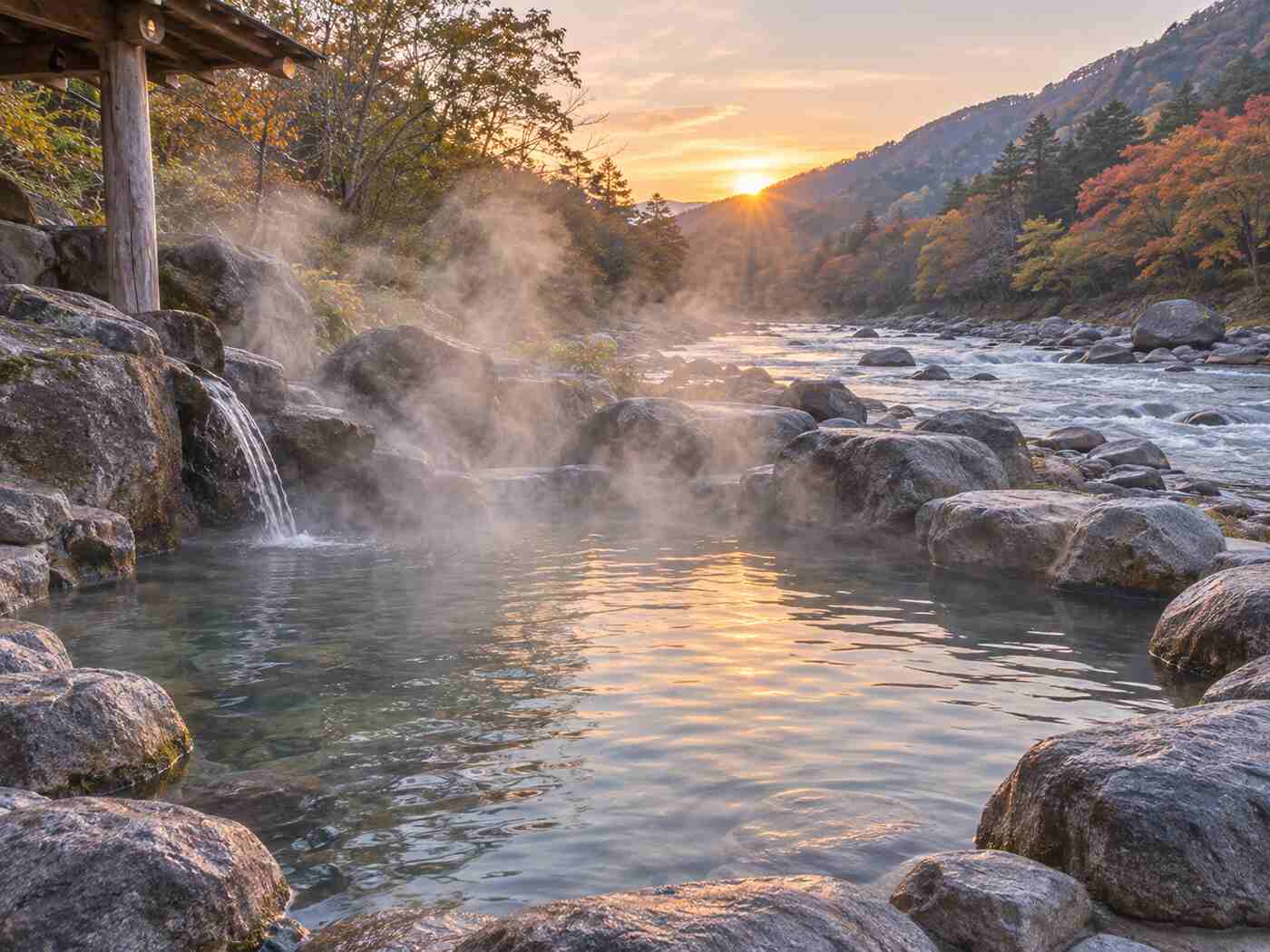
Settlement grew quickly in the 1910s. Construction of Elephant Butte Dam, from 1912 to 1916, brought workers to the area, according to Wikipedia. The City of Truth or Consequences says the community adopted the name Hot Springs when it incorporated in 1916. The El Paso Community College guide dates the dropping of Palomas to 1914, so sources differ slightly on when the old name went out of use.
The town became the seat of Sierra County in 1937, Wikipedia records. The same year saw a federally funded hospital open, as KJZZ reported in 2014. This facility, later the Carrie Tingley Children’s Hospital, used the mineral water for hydrotherapy for children with polio, according to the National Register nomination.
The bathhouse boom
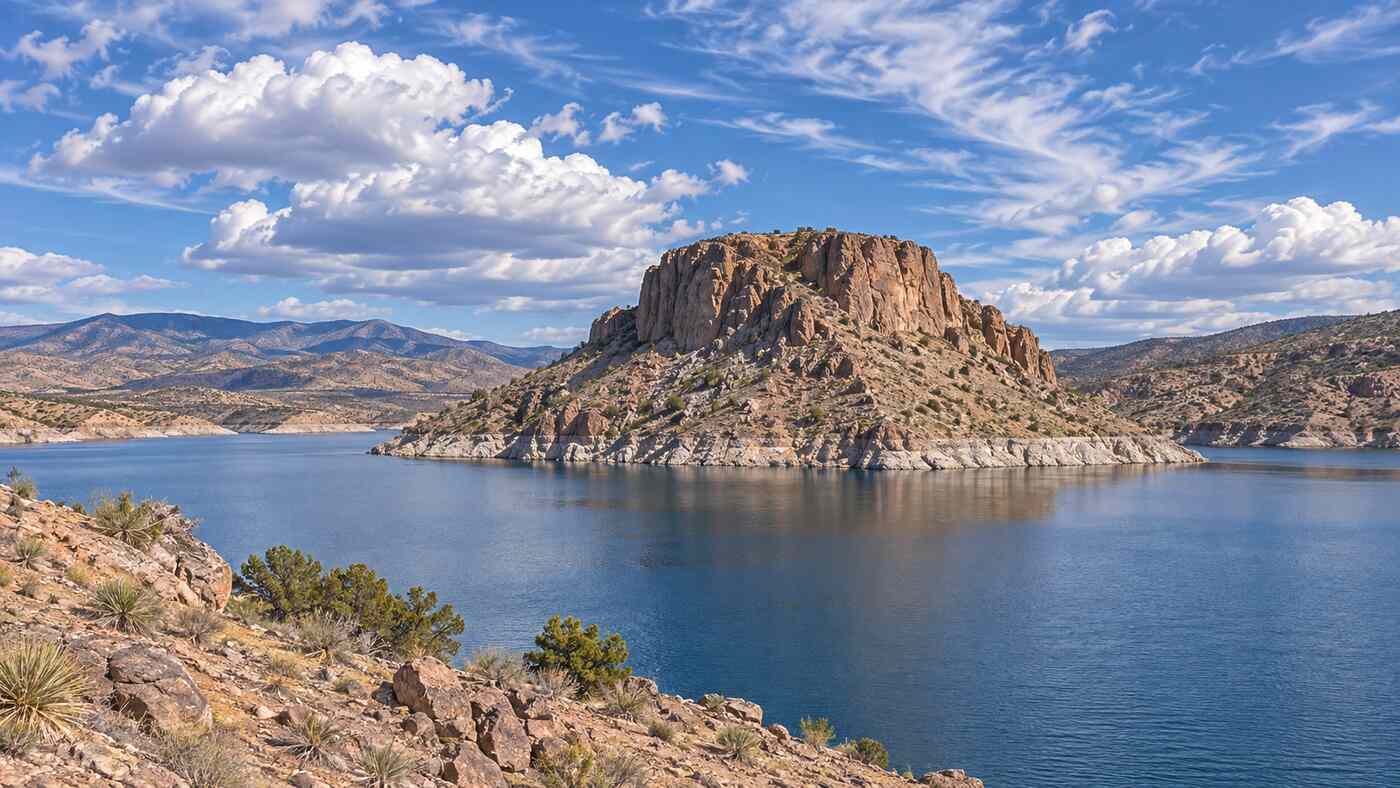
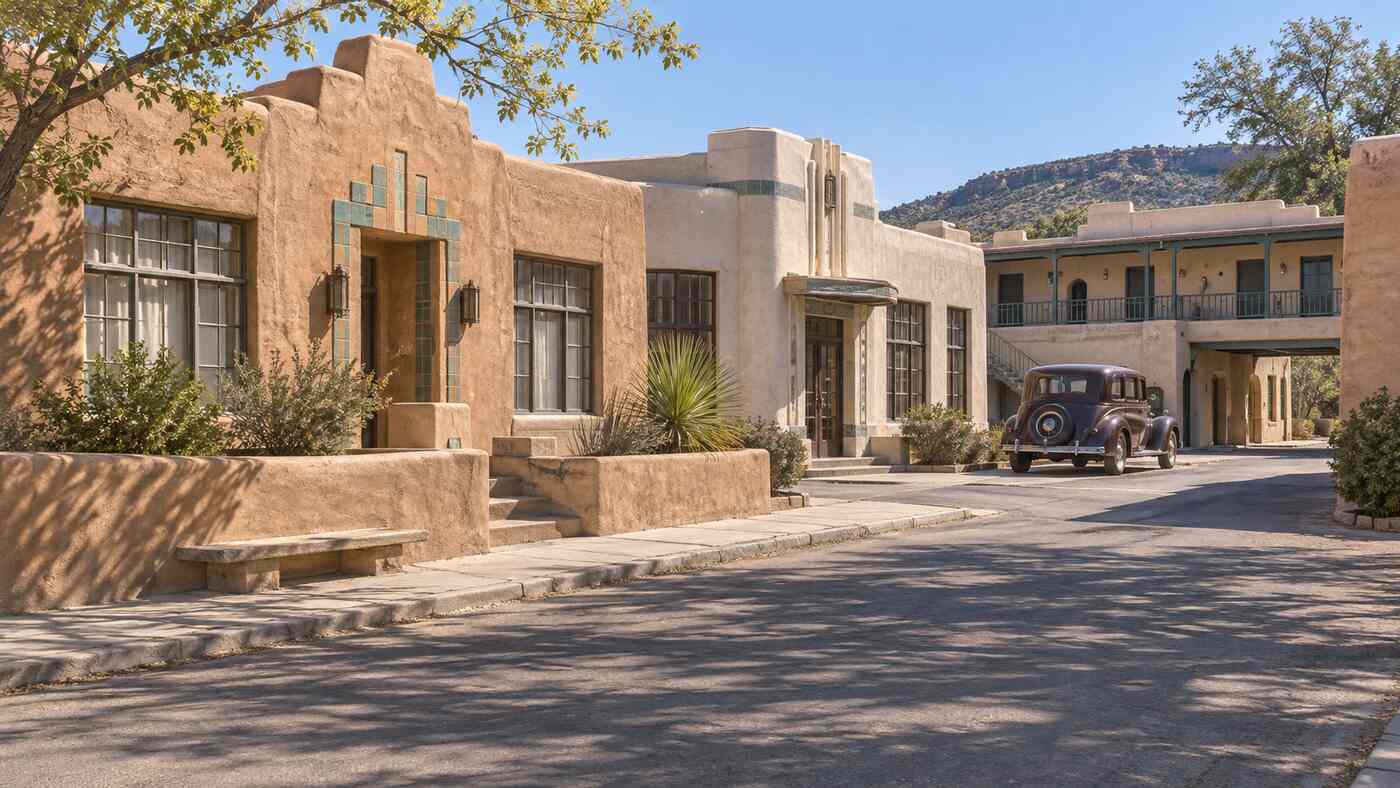
Hot Springs sold itself as a health resort. The city’s page on the historic bathhouse district says dozens of bathhouses were built between the 1910s and the 1940s, concentrated around Austin and Pershing streets near the river. Wikipedia counts about 40 spas by the late 1930s, roughly one for every 75 residents.
Most were modest buildings: a few soaking rooms, a lobby and sometimes motel rooms. Visitors came for the hot, mineral-rich water and the dry climate. The National Register nomination describes a district of about 56 acres whose significance runs from 1916 to 1950, the period when the town was a health resort.
Why was the town renamed Truth or Consequences?
In 1950 Ralph Edwards, host of the NBC radio quiz show Truth or Consequences, offered to broadcast the show’s tenth anniversary programme from the first town that renamed itself after it. The city’s history page says Hot Springs took up the challenge, and the rename became official on March 31, 1950. The anniversary broadcast was made from the town the next day.
Wikipedia records that residents voted 1,294 to 295 in favour. The National Register nomination notes that the first fiesta drew a parade crowd of more than 10,000 people.
Timeline
| Year | Event |
|---|---|
| 1882 | John Cross Cattle Company builds a bathhouse over the spring |
| 1912–1916 | Elephant Butte Dam built upstream |
| 1916 | Town incorporates as Hot Springs |
| 1937 | Becomes Sierra County seat; federally funded hospital opens |
| Late 1930s | About 40 bathhouses in operation |
| 1950 | Renamed Truth or Consequences on March 31 |
| 2012 | State moratorium on new well permits in the basin |

The historic bathhouse district today
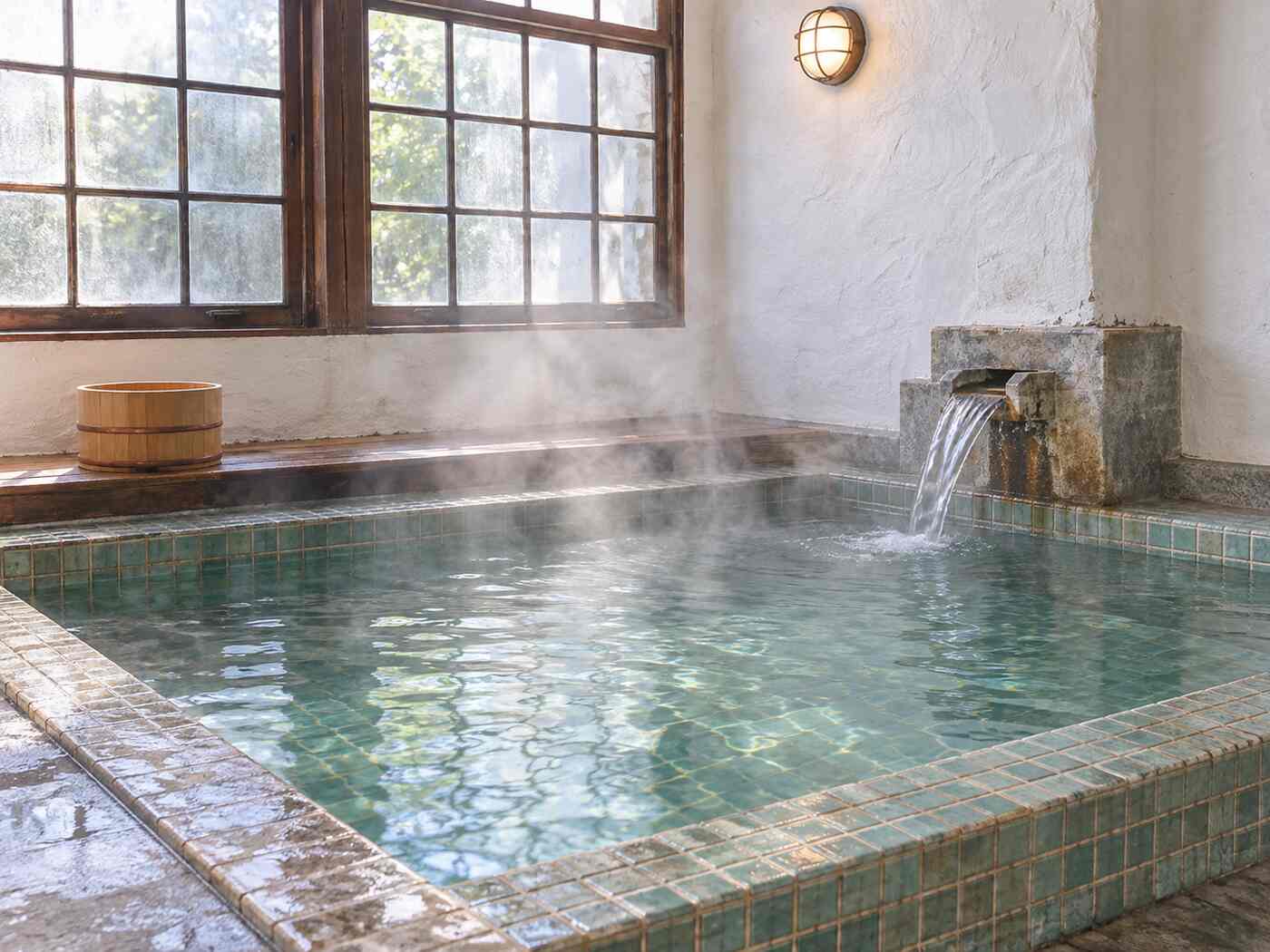
The Hot Springs Bathhouse and Commercial Historic District remains the centre of the town’s visitor economy. Several of its resort-era buildings are still in use as soaking houses. Wikipedia notes that ten bathhouses belonged to the local hot springs association in 2008.
KJZZ reported that bathhouses produced about half of the town’s lodgers’ tax revenue in 2014, which shows how central the springs remain to local finances. If you visit, the district is compact enough to explore on foot.
Is the hot water running out?
The springs that built the town are under pressure. Wikipedia cites appropriation records showing that rights to geothermal water grew from about 130,000 gallons a day in 1941 to about 1.5 million gallons a day by 2013, and says the natural artesian flow has ceased. KJZZ reported that the state placed a moratorium on new well permits in the basin in 2012 while a study, led by Mark Person of New Mexico Tech, looked at how much water the system could supply.
The issue is a familiar one in desert towns: a shared resource, many users and limited data. It also links to the wider theme of this site, using what you have carefully. Our guide to edible desert plants of New Mexico looks at another local resource, and our chest freezer to fridge conversion guide covers saving energy in a hot climate.
Hot springs are part of recovery routines in Thailand too, from Raksawarin in Ranong to the springs near Pai. Siam Recharge covers training and recovery in Thailand.
Key takeaways
- The springs were known as Palomas Hot Springs; a cattle company built a bathhouse there in 1882.
- The town incorporated as Hot Springs in 1916 and grew into a spa resort.
- About 40 bathhouses operated by the late 1930s.
- The rename to Truth or Consequences took effect on March 31, 1950, after a radio show challenge.
- Rising demand has ended the natural artesian flow, and new wells have been restricted since 2012.
Common questions
Why is the town called Truth or Consequences?
In 1950 radio host Ralph Edwards promised to broadcast his NBC quiz show’s tenth anniversary programme from any town that renamed itself after the show. Hot Springs accepted. The new name took effect on March 31, 1950, and the show was broadcast from the town the next day.
Where does the hot water come from?
The water rises from the Hot Springs Artesian Basin along the Rio Grande rift, a zone where the Earth’s crust is pulling apart and heat is closer to the surface. Bathhouses draw it from shallow wells. The city, college and federal sources all link the springs to this geology.
How many bathhouses were there?
Wikipedia counts about 40 spas by the late 1930s, around one for every 75 residents. The city says dozens were built between the 1910s and the 1940s. A smaller number remain in business today, mostly in the historic district near Austin and Pershing streets.
Is the bathhouse district a protected historic site?
Yes. The Hot Springs Bathhouse and Commercial Historic District is listed on the National Register of Historic Places. The nomination describes about 56 acres significant for the period from 1916 to 1950, when the town was a health resort.
Was the hot springs water used in medicine?
The National Register nomination says the Carrie Tingley Children’s Hospital used the mineral water in hydrotherapy for children with polio. KJZZ reported that the hospital opened in 1937 with federal funding. Today’s bathhouses offer soaking, but our sources do not support specific health claims for the water.
How we put this together: we built this history from the City of Truth or Consequences, the National Register nomination for the bathhouse district, KJZZ’s 2014 reporting, an El Paso Community College research guide and Wikipedia, and noted where they differ on dates. Read more of our guides, including pallet wood reuse, from the home page.
Sources
- City of Truth or Consequences, history of the name
- City of Truth or Consequences, historic bathhouse district
- National Register of Historic Places nomination, Hot Springs bathhouse district
- KJZZ, New Mexico town questions abundance of its hot springs
- El Paso Community College, Truth or Consequences research guide
- Wikipedia, Truth or Consequences, New Mexico